An Expert Guide for Parents in Colorado Springs
The Question Every Parent Asks
One of the most common questions we hear at Little Fins Swim School is:
“How do I know if my child is ready for swim lessons?”
It’s a thoughtful question — and the right one to ask. Most parents assume readiness starts at age 3 or 4. But when it comes to water safety and drowning prevention, that timeline is outdated.
The truth?
Water readiness begins in infancy.
And in many cases, the safest time to start is much earlier than families realize.
As a swim school owner in Colorado Springs who has helped thousands of families start their swim journey, I can confidently say:
Most children are ready earlier than parents think.
Let’s break it down clearly.
Quick Answer: When can babies start swim lessons?

-
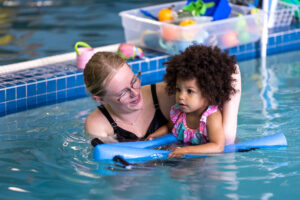
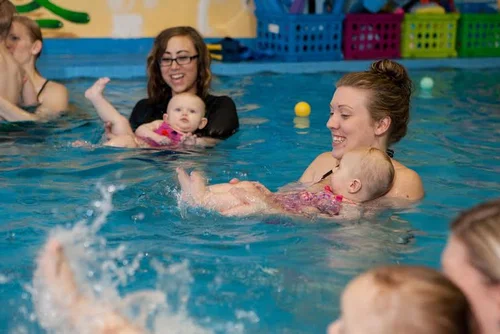
Parent-and-me water introduction classes can begin as early as 2 months old.
-
One-on-one safety and survival swim instruction can begin around 6 months of age, depending on developmental readiness.
Early exposure builds water comfort, breath control, and body awareness — all critical components of drowning prevention.
Why Starting Early Matters
Drowning is the leading cause of accidental death for children ages 1–4.
Waiting until preschool misses the highest-risk window.
At Little Fins, we follow an Infant Safety & Survival (ISS)-based approach that prioritizes:
-
Breath control
-
Back floating
-
Independent self-rescue skills
-
Calm water confidence
Because water accidents don’t wait until kindergarten.
Read more on Infant Survival Swim lessons
What “Ready” Actually Means
Readiness is not about:
❌ Talking clearly
❌ Being potty trained
❌ Being fearless
❌ Knowing how to listen perfectly
Readiness is about:
✅ Physical development
✅ Emotional regulation
✅ Neurological adaptation
✅ Safe instructor guidance
And those foundations can begin in infancy.
Stage 1: 2 Months – 6 Months
Parent & Me Water Introduction
At this stage, lessons focus on:
-
Water comfort
-
Breath cue introduction
-
Gentle submersion control
-
Parent bonding
-
Sensory adaptation
Infants are neurologically primed for water exposure.
The earlier babies experience calm, positive water interactions, the more naturally they develop comfort and regulation in aquatic environments.
This is not “teaching strokes.”
It is building a water-safe nervous system.
Stage 2: 6 Months and Up
One-on-One Safety & Survival Training
Around 6 months, many babies are developmentally capable of beginning structured safety instruction.
This includes:
-
Controlled breath holding
-
Rolling to back float
-
Sustained floating for air
-
Beginning Swim–Float–Swim sequences
The goal is not speed.
The goal is self-rescue independence.
This is the foundation of the ISS model.
“But Won’t That Be Scary?”
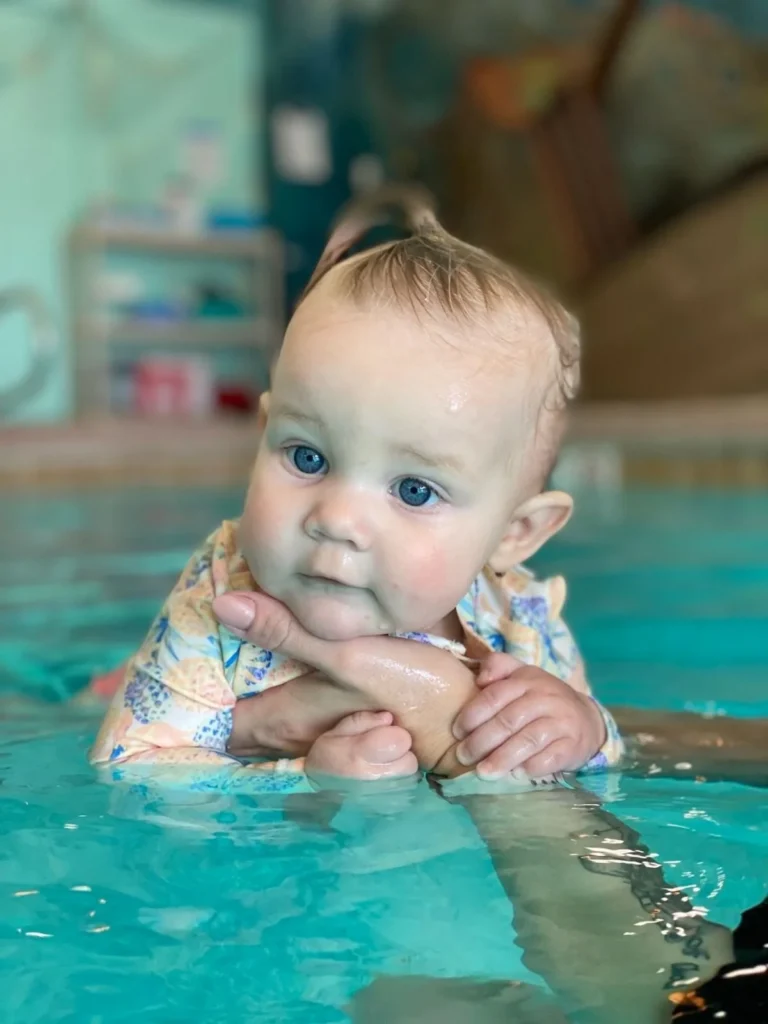
This is one of the biggest concerns parents have.
Here’s the expert perspective:
Fear comes from unfamiliar environments.
Confidence comes from guided exposure.
When instruction is:
- Warm-water based
- One-on-one
- Progression-driven
- Calm and consistent
Children adapt beautifully.
Our role as instructors is to support, not overwhelm.
What If My Child Is 2, 3, or 5 Years Old?
It is never too late.
However:
Children who start earlier often:
-
Show less fear
-
Adapt faster
-
Develop stronger float reflexes
-
Retain survival skills longer
Older beginners can absolutely succeed, they simply may need more time to undo fear patterns.
Early exposure prevents fear from forming.
How Do I Know If My Baby Is Ready at 6 Months?
Ask yourself:
-
Can they sit with support?
-
Do they show curiosity in water?
-
Can they tolerate brief changes in position?
-
Are they medically cleared for normal activity?
If yes, they are likely ready for evaluation.
The best way to know for certain?
Schedule an assessment.
Why Little Fins Teaches This Way
At Little Fins Swim School in Colorado Springs, we are building more than swimmers.
We are building:
-
Safer families
-
Confident children
-
A culture of early drowning prevention
Our mission is clear:
Safety first. Skills for life. Awareness for the world.
We don’t wait for children to “outgrow risk.”
We teach them to navigate it.
Common Myths About Infant Swim Lessons
Myth: “Babies can’t learn survival skills.”
Truth: Babies can learn breath control and floating reflexes earlier than most parents realize.
Myth: “They’ll forget it anyway.”
Truth: Skills fade without practice — which is why consistency matters.
Myth: “It’s too intense.”
Truth: Structured, professional instruction balances challenge with support.
The Real Question Isn’t “Are They Ready?”
It’s:
“Are we ready to give them the tools that could save their life?”
Water doesn’t wait for developmental milestones.
And prevention is always stronger than reaction.
Final Expert Perspective
As a swim school owner and advocate for early safety education, I believe readiness is less about age and more about opportunity.
Babies are adaptable.
Toddlers are resilient.
Children are capable.
When instruction is thoughtful and intentional, even the youngest swimmers can learn how to float, breathe, and survive.
And that changes everything.
Ready to Start Early?
Whether your baby is 2 months or your toddler is 2 years, we’ll meet them where they are.
👉 Schedule your Free Trial Lesson
📍 Little Fins Swim School | Colorado Springs, Colorado
💙 Because safety shouldn’t wait.
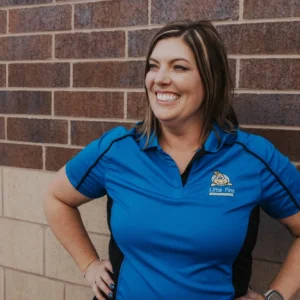
Lauri (Thomas) Armstrong is the founder and owner of Little Fins Swim School in Colorado Springs, Colorado. A leader in Infant Safety & Survival (ISS) education and drowning prevention advocacy, Lauri has helped thousands of families build life-saving water skills through early, research-based instruction.
Under her leadership, Little Fins offers parent-and-me water introduction beginning at 2 months and one-on-one safety and survival training starting at 6 months — positioning the school at the forefront of early childhood aquatic education in Colorado.
Lauri is passionate about replacing fear with confidence and believes that water safety should begin before a child can walk — not after a close call.
Safety first. Skills for life. Awareness for the world.
 Read more about Infant Survival Swim Learn about our Colorado Springs swim lessons Schedule a trial lesson