Infant Survival
- Home
- Service
- Infant Survival
Infant survival swim lessons for babies 6–24 months in Colorado Springs.
Infant Survival Swim Lessons
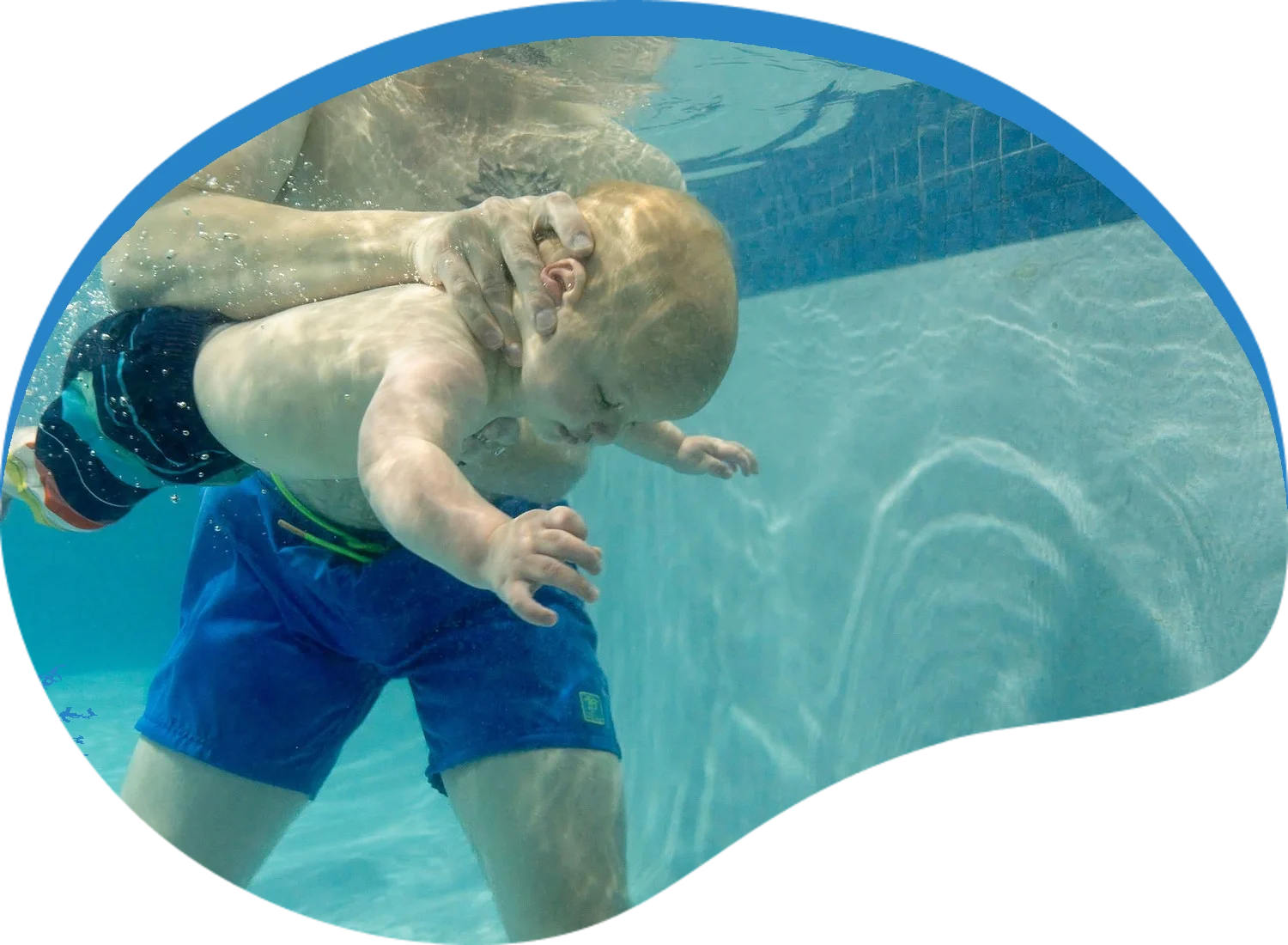
Infant Survival Swim (ISS) Lessons at Little Fins Swim School focus on teaching your baby a specific sequence called “swim-float-swim.” Through 1-on-1 instruction in our Colorado Springs pools, babies learn to move through water, roll to their back to rest and breathe, then continue swimming toward safety. These aren’t the recreational lessons you might picture with songs and water toys, rather, this is focused instruction designed to build genuine water safety skills during a unique developmental window when babies possess natural reflexes that make learning in water particularly effective.
Between six and 24 months, infants have several physiological advantages for water learning. For many infants, their recent experience in the womb makes water feel familiar rather than foreign, and their natural buoyancy supports the floating skills they’re learning. This developmental stage combines curiosity about their environment with physical capabilities that allow them to develop water competency earlier than many parents expect.
Our instructors work individually with each baby during 30-minute sessions that progress at your child’s pace. Parents watch from the poolside throughout every lesson, observing their baby’s development while the instructor builds the focused relationship that helps infants relax and learn. This 1-on-1 format allows our trained staff to read your baby’s responses, adjust techniques based on their temperament and development, and celebrate progress in ways that support genuine skill building.
Colorado Springs families choose Infant Survival lessons because water is part of life here. Whether it’s the neighborhood pool, a backyard hot tub, or one of the natural water features around our community, water exposure is common. Infant Survival instruction creates a foundation of skills that grows with your child, building confidence and capability that extends well beyond these early lessons.
If you’re looking for a parent-participation experience where you join your baby in the water for bonding and playful introduction, our Aqua Babies program offers exactly that in a group setting with songs, sensory activities, and shared learning time. Many families start with Aqua Babies and later add Infant Survival training, or choose one program based on their primary goals. Both approaches offer valuable benefits. Infant Survival lessons simply take a different path, prioritizing individualized safety skill development through focused instruction.
Ready to give your infant essential water safety skills? Call Little Fins Swim School at (719) 344-5328 or schedule your Infant Survival lesson online today.
Why Infant Survival Training Works
Research shows that infancy is actually the optimal time to teach survival swimming skills because of reflexes that fade as children grow older. For many infants, these water-protective reflexes include automatic breath holding, the ability to keep eyes open underwater without discomfort, and instinctive responses that prevent most infants from swallowing water during brief submersions. These are developmental advantages that we help nurture into survival skills.
Beyond survival skills, swimming provides documented developmental benefits during infancy. A study conducted in Iceland found that four-year-olds who had completed formal swimming instruction as babies outperformed peers in several areas. The research measured improvements in motor function skills including gripping, reaching, and balance, as well as enhanced cognitive, emotional, and social development. Children who participated in just two hours of swimming per week for four months during infancy scored notably higher on tests of prehension and static balance years later. Formal swimming lessons have also been shown to significantly reduce drowning risk in young children — learn more about what the research says.
At Little Fins, we’ve watched hundreds of infants progress through ISS training. What strikes us isn’t just that they learn to float and swim, it’s how quickly they adapt, and how calmly they respond to water. A baby who learns survival swimming at eight months can retain and continue building on those abilities and as they grow, creating a foundation for water confidence that continues through childhood.
The individual instruction model we use acknowledges that every infant develops differently. Some babies take to floating immediately. Others need more time to relax their bodies enough to achieve the proper position. Our instructors adjust pacing, techniques, and expectations based on your specific child’s responses, temperament, and developmental stage. We’re teaching survival skills while honoring your baby’s unique learning pace.
What is the Swim-Float-Swim method?
The three-part self-rescue sequence your baby learns — and why it works better than stroke-first instruction.
What is Infant Survival Swim (ISS)?
How ISS differs from ISR, what survival-focused instruction actually means, and how to choose the right program.
How swim lessons reduce drowning risk by 88%
The research behind early swim instruction and why starting in infancy makes a measurable difference.
How Does ISS Compare to ISR?
Ready to get started? Schedule your first lesson at our Garden of the Gods or Union Boulevard location. Call (719) 344-5328 or view available times online.
What Parents Need to Know About Infant Survival Lessons
Walking into your first infant survival swim lesson comes with questions. Here’s what actually happens, what you should expect, and what you need to prepare.
The 1-on-1 Format: Each Infant Survival lesson involves one child with one instructor for the full 30 minutes. Multiple lessons may run simultaneously in our pool, but your baby receives completely individualized attention from their instructor throughout the session. This focused approach allows the instructor to carefully monitor your infant’s responses, adjust techniques in real time, and build the trust relationship that helps babies relax and learn.
Parent Role During Lessons: Parents do not enter the pool during Infant Survival lessons. You’ll watch from the poolside, and many parents find this surprisingly reassuring once they see how their baby responds to working directly with the instructor. The 1-on-1 dynamic helps babies focus and allows instructors to read subtle cues about fatigue, comfort levels, or readiness for the next skill. You’re always present, always watching, but the instruction happens between your child and their trained teacher.
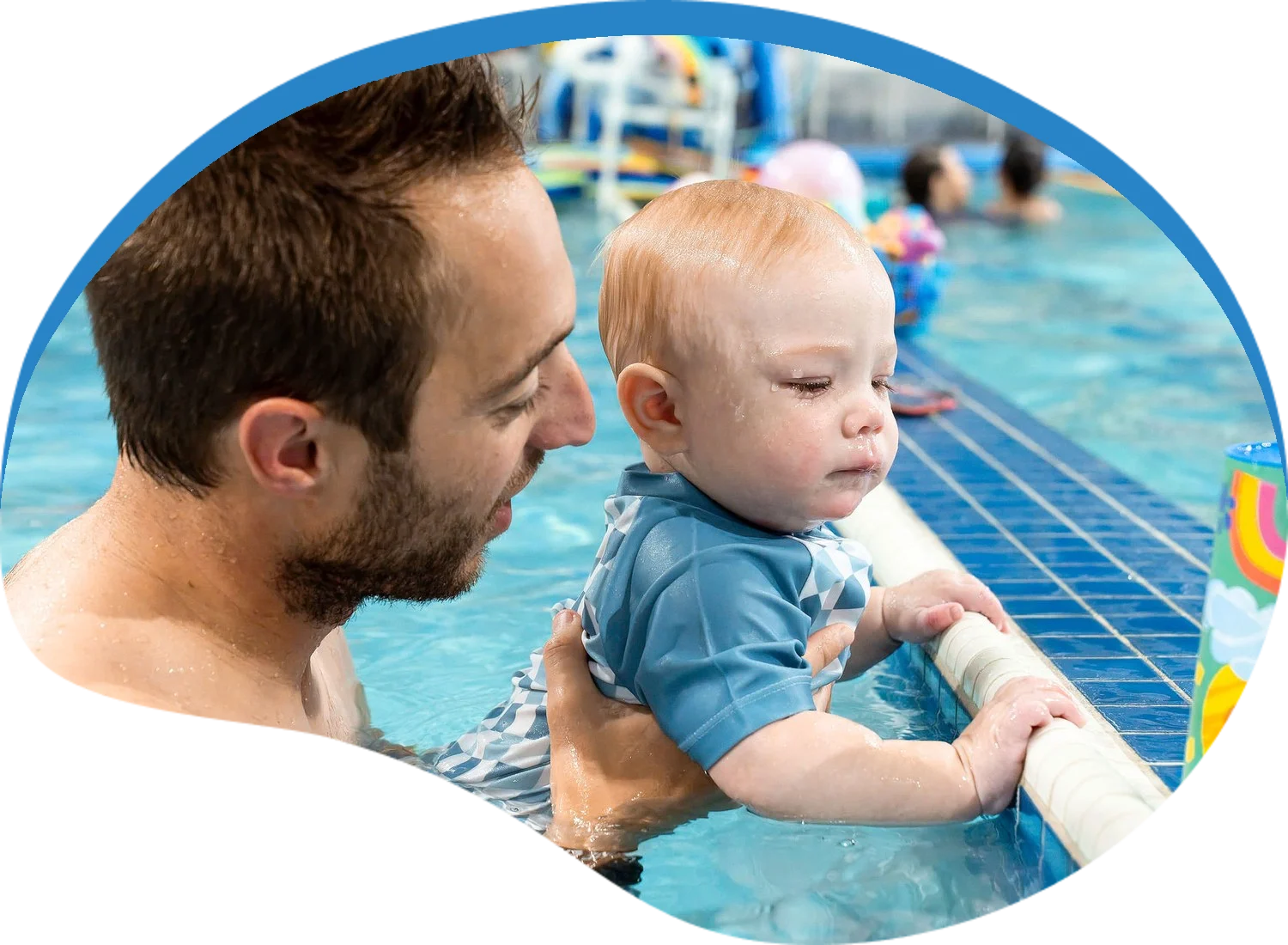
What to Bring: Your baby needs a swimsuit and you’ll need a towel for after the lesson. Infants who aren’t potty trained must wear a Splash About Happy Nappy swim diaper. Standard swim diapers don’t provide sufficient containment for pool environments, and Little Fins requires the specific Happy Nappy brand for hygiene and safety. You can purchase these online or at local retailers. Some parents also bring a comfort item for after the lesson, though babies typically can’t have toys or pacifiers in the pool during instruction.
Scheduling and Commitment: Infant Survival lessons work best with consistency. Little Fins offers flexible scheduling at both our Garden of the Gods and Union Boulevard locations in Colorado Springs, with sessions available throughout the week. Our heated indoor pools maintain 94-degree water temperature year-round, making lessons comfortable for infants regardless of Colorado’s outdoor weather. Many families find that regular lesson times, built into their weekly routine, help babies adjust to the structure and make steady progress.
How Babies Respond: Every infant reacts differently to survival swim training. Some babies adapt quickly, showing little distress as they learn to roll to their back and float. Others express more emotion during portions of lessons, particularly in early sessions when the experience is new and certain skills feel unfamiliar. This response is completely normal for many infants, and our instructors are extensively trained to distinguish between learning-related discomfort and signs that a baby needs a break or adjustment to the approach.
Our instructors work closely with parents to address concerns, explain what they’re observing in your baby’s responses, and adjust as needed while maintaining the program’s effectiveness. Most families report that initial adjustment periods are brief, with babies becoming more comfortable with the routine and skills within the first few weeks of consistent lessons
Transitioning to Other Programs: Infant Survival Swim lessons focus specifically on the swim-float-swim sequence and back floating for safety. As your child grows and develops, they’ll be ready for more comprehensive swimming instruction. Many families transition from ISS lessons to Little Fins’ regular one-on-one lessons around age two or three, building on the water confidence and skills established during the survival program. We help you identify the right timing for this transition based on your child’s development and readiness for broader stroke instruction.
The Infant Survival Lesson Structure and Skills Progression
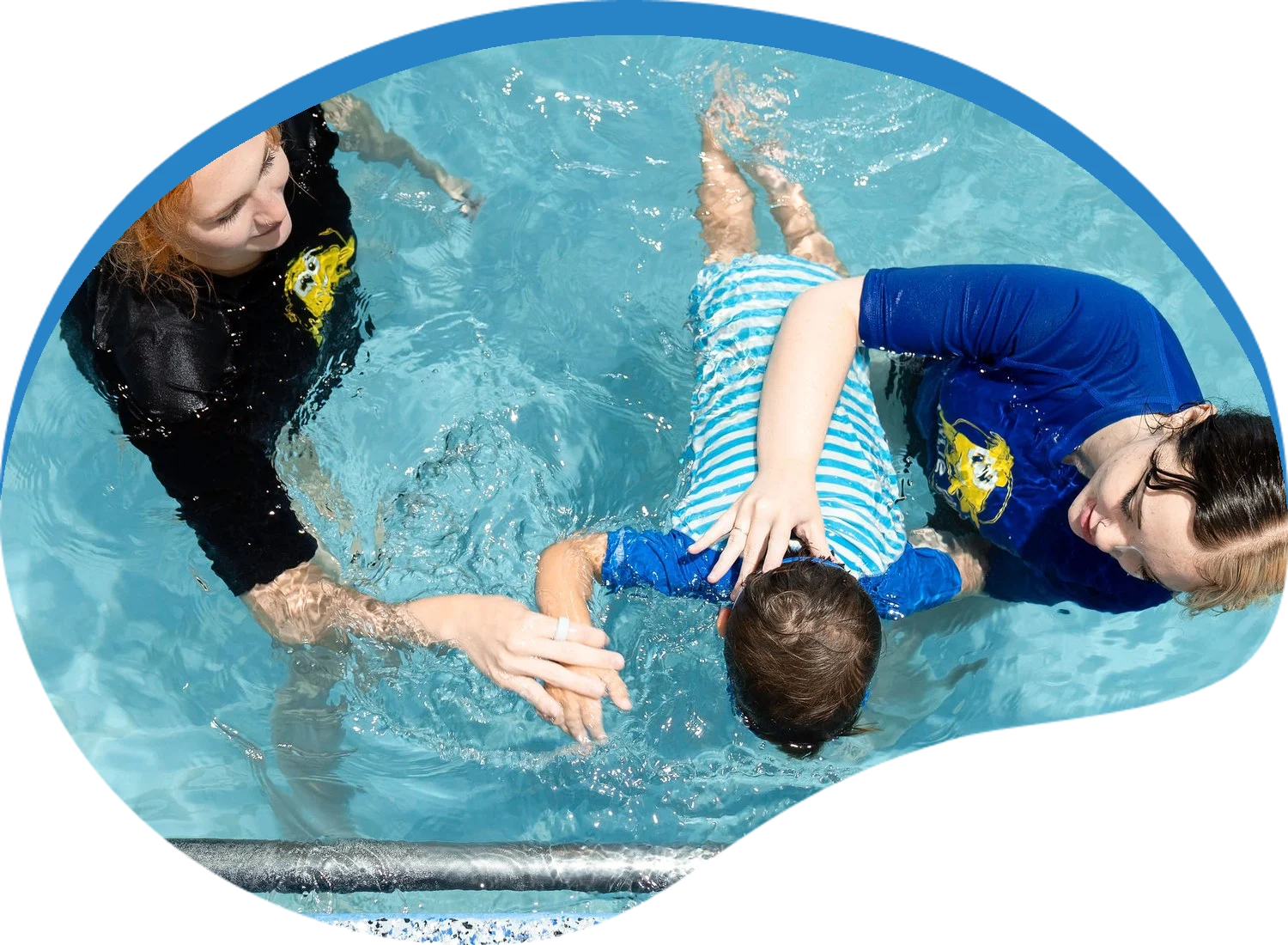
Understanding what happens during those 30 minutes helps you know what to expect and what your baby is working toward.
The Swim-Float-Swim Approach: Little Fins teaches babies key elements of water survival through a developmentally appropriate sequence adapted to each child’s readiness. Instructors guide infants through learning to swim toward the surface, roll onto their back to float and breathe, then continue moving toward safety or an exit point. This flexible approach builds self-rescue capabilities that work with your baby’s natural development, rather than following a rigid, standardized program. The goal is functional water safety skills that match your child’s individual pace and abilities.
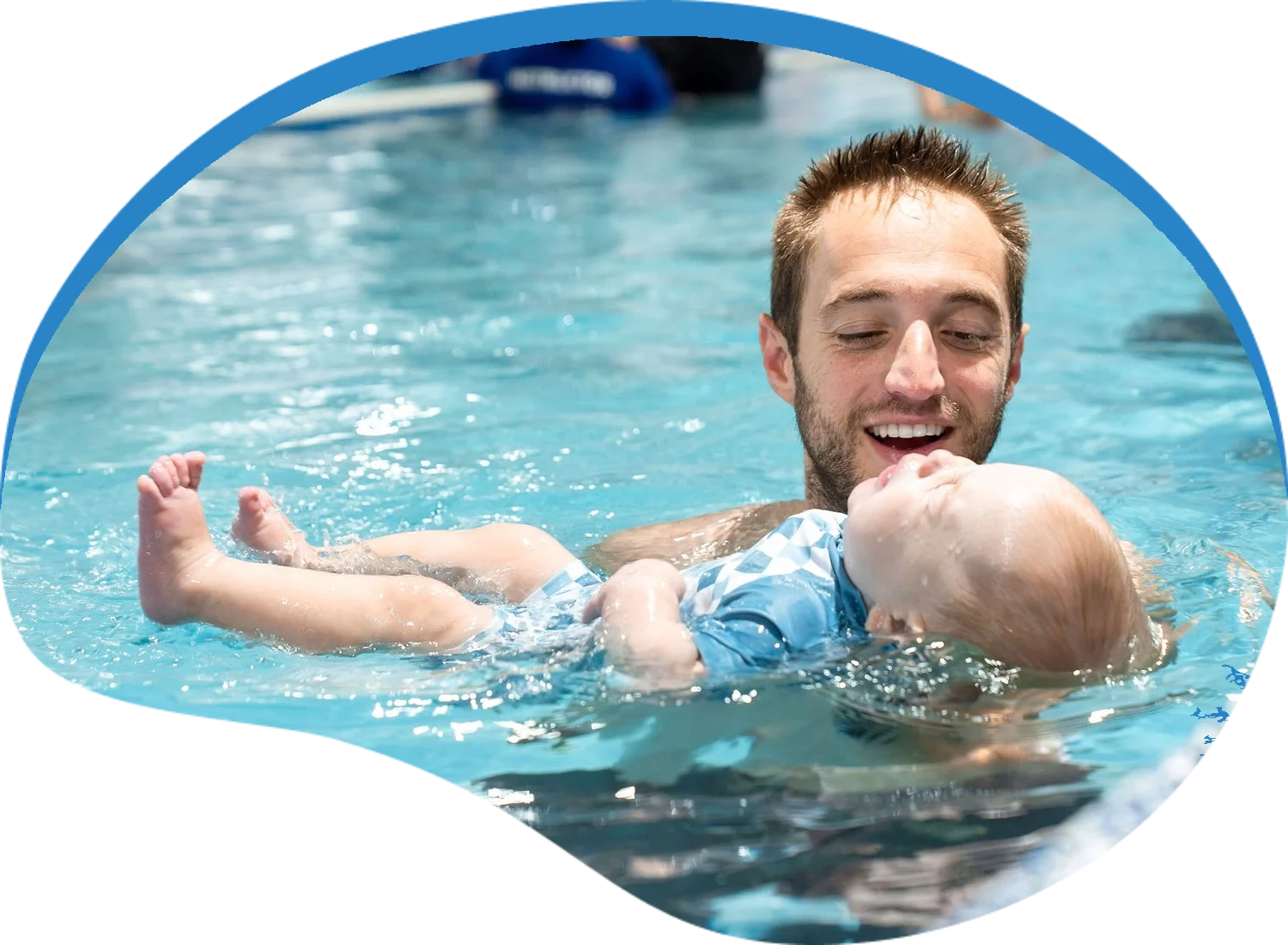
Floating Skills: The foundation of infant survival swimming is back floating. Your baby learns to relax their body, arch their back slightly, and position their head so their face stays above water while they rest. This isn’t the rigid military-style floating that older children learn. Infant floating uses natural buoyancy and body positioning to create a restful state where babies can breathe normally and recover from exertion.
Learning to float takes time and varies significantly between babies. Some infants relax into floating positions within days. Others need weeks to overcome the instinct to tense their body or lift their head. Instructors work patiently through this progression, supporting babies physically as they learn the sensation of floating and gradually reducing assistance as the child demonstrates the ability to maintain the position independently.
Swimming Skills: Once your baby can float reliably, instruction expands to include swimming movements. Infants learn to kick their legs, move their arms in basic paddling motions, and coordinate breathing while moving through water face-down. These aren’t refined swimming strokes, they’re functional movements that propel babies forward in water and allow them to reach a wall, step, or adult who’s nearby.
The swim-float-swim sequence connects these skills into practical survival behavior. Your baby practices swimming a short distance, rolling to their back to float and rest, then rolling back to their stomach to continue swimming. This pattern can repeat multiple times, allowing an infant to cover more distance than they could swim continuously and giving them a reliable approach that works even when they’re tired.
Progressive Development: Infant Survival lessons build skills gradually over multiple sessions. Early lessons focus heavily on comfort and adjustment, introducing your baby to the instructor and the pool environment. As your infant adapts, lessons shift toward specific skill practice with increasing independence. Later sessions focus on endurance, consistency, and practicing the full swim-float-swim sequence in various scenarios.
The timeline for completing Infant Survival training varies based on your child’s age, temperament, and individual learning pace. Some babies demonstrate reliable survival skills with consistent attendance while others need months to build the strength, coordination, and comfort level required. Little Fins instructors assess progress continuously and communicate clearly with parents about what they’re observing and what skills your baby is developing.
Skill Integration: Throughout Infant Survival instruction, each element builds toward the complete swim-float-swim sequence. Babies practice these skills in ways that help them become second nature, creating water competency that serves them well as they grow and encounter different water environments throughout childhood
Schedule Infant Survival Swim Lessons
PRE-REGISTRATION IS REQUIRED FOR ALL INFANT SURVIVAL LESSONS.
Ready to provide your infant with essential water safety training? Infant Survival lessons are available year-round at both Little Fins Swim School locations in Colorado Springs.
Schedule online or call Little Fins at (719) 344-5328 for information about lesson times, instructor availability, and pricing.
Serving families at our Garden of the Gods and Union Boulevard locations. View locations and hours online.
Communities We Serve
Frequently Asked Questions
What's the youngest age for Infant Survival lessons?
Babies can begin Infant Survival instruction at six months developmentally. At this age, most infants have developed sufficient head and neck control to safely participate in survival swim training. The program serves infants through 24 months, though children older than two often transition to standard one-on-one swim lessons that offer broader skill development beyond survival techniques.
How is Infant Survival different from Aqua Babies?
Infant Survival lessons and Aqua Babies serve different purposes for different families. Infant Survival provides one-on-one instruction focused specifically on teaching the swim-float-swim survival sequence. Parents watch from the poolside while trained instructors work individually with babies. Aqua Babies is a parent-participation program where you’re in the water with your child, learning through songs, play, and gentle water introduction in a group setting. Aqua Babies builds water confidence and bonding. Infant Survival builds specific survival skills. Both offer valuable benefits, and the right choice depends on your family’s priorities and what you want your baby to learn
Will my baby cry during Infant Survival lessons?
Every infant responds differently to survival swim training. Some babies adapt quickly and show minimal distress as they learn new skills. Others express more emotion during portions of lessons, particularly when the experience is new or certain skills feel unfamiliar. Both responses are completely normal. Our instructors are trained to work with different temperaments and adjustment styles while maintaining program effectiveness. Most families report that babies become noticeably more comfortable within the first few weeks as the routine becomes familiar and skills become more natural.
Do I need to stay during the entire lesson?
Yes. Parents must remain poolside throughout their baby’s Infant Survival lesson. You won’t be in the pool, but you’ll watch the entire 30-minute session. This presence reassures your infant, allows you to see exactly what they’re learning, and gives you opportunities to ask the instructor questions about your baby’s progress and what you’re observing.
How long does it take for babies to learn survival swimming skills?
The timeline varies significantly between children based on age, temperament, physical development, and how quickly they adapt to water and instruction. Some infants demonstrate reliable swim-float-swim skills within four to six weeks. Others need several months to build the strength, coordination, and comfort required. Little Fins instructors assess each baby individually and communicate clearly about progress. Consistency helps. Babies who attend lessons regularly on a set schedule typically progress more quickly than those with irregular attendance.
Is Infant Survival Swim the same as ISR?
ISR (Infant Swimming Resource) is a specific branded certification program. Infant Survival Swim is the broader category of survival-focused instruction we teach using our Swim-Float-Swim method. See a full comparison of ISS and ISR.