Drowning Doesn’t Look Like You Think
When most people picture drowning, they imagine splashing, yelling, and obvious distress.
The truth?
Drowning is silent. Drowning is fast. And it often happens when adults are nearby.
At Little Fins Swim School—and through our Infant Survival Swim (ISS) program—we spend every day educating families on what drowning really looks like… and more importantly, how to prevent it.
Because awareness is the first step to saving a life.
What the Reality of Drowning Actually Looks Like
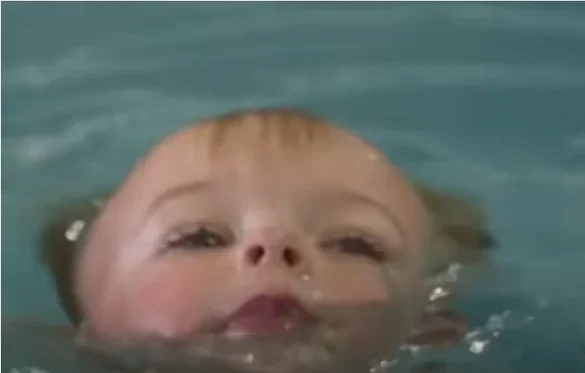
Drowning is not dramatic. It’s subtle. And it’s often missed.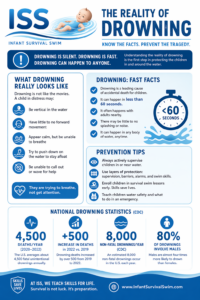
A child in distress may:
- Be vertical in the water with no kick
- Have little to no forward movement
- Appear calm, but be unable to breathe
- Push down on the water in an attempt to stay afloat
- Be unable to call out, wave, or signal for help
They are trying to breathe—not trying to get attention.
This is why so many incidents happen just feet away from adults.
Fast Facts Parents Need to Know
- Drowning is a leading cause of accidental death for children
- It can happen in less than 60 seconds
- It often happens with adults nearby
- There may be little to no noise or splashing
- It can happen in any body of water—anytime
Let that sink in.
This isn’t about fear—it’s about awareness and preparation.
Why Traditional Swim Lessons Aren’t Enough
Many swim programs focus on comfort, play, or stroke development.
And while those things have value…
They are not survival skills.
A child can:
- Love the water
- Feel comfortable
- Splash and play confidently
…and still not know how to save themselves.
That’s where ISS (infant survival swim) is different.
What Makes Infant Survival Swim (ISS) Different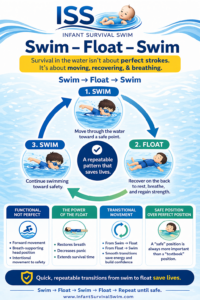
ISS is not just swim lessons.
It’s a life-saving system built around one critical outcome: teaching children how to get to a safe breathing position independently.
At the core of ISS is the Swim–Float–Swim method, where children learn to:
- Swim with purpose
- Roll onto their back to float and breathe
- Recover, rest, and continue as needed
This is not about perfection.
This is about survival under real-life conditions.
Prevention Starts With Layers of Protection
At Little Fins and through ISS, we teach families to use layers of protection, not just one solution:
- Active supervision (undistracted, within arm’s reach)
- Barriers and alarms (fences, pool covers, door alarms)
- Water safety education
- Survival swim lessons (ISS)
Because no single layer is enough on its own, according to our friends at Stop Drowning Now.

Why This Matters More Than Ever
According to national data:
- Over 4,500 people drown each year in the U.S.
- Thousands more experience non-fatal drowning incidents
- The majority of child drownings happen in familiar environments
This isn’t rare.
It’s happening every single day.
And the hardest truth?
Many of these incidents are preventable.
Our Mission: Changing the Outcome
At Little Fins Swim School, we’ve taught tens of thousands of lessons—but our mission goes far beyond teaching kids how to swim.
We exist to save lives through water safety education and world-class swim instruction
Through our partnership with and development of Infant Survival Swim (ISS), we are expanding that mission beyond our pool—into communities, schools, and families everywhere.
Because every child deserves the skills to survive.
What You Can Do Today
If you’re a parent, caregiver, or educator:
Start here:
- Learn the real signs of drowning
- Stay within arm’s reach around water
- Remove distractions (phones down)
- Talk to your children about water safety
- Enroll in survival-based swim instruction
Take the Next Step
If you’re in Colorado Springs, we invite you to experience the difference at Little Fins Swim School.
If you’re outside our area—or want to learn more about the methodology:
Explore Infant Survival Swim (ISS) at www.InfantSurvivalSwim.com
Because survival isn’t luck.
It’s preparation.
Q&A
What does drowning actually look like?
Drowning is often silent and quick. A child may appear calm, vertical in the water, and unable to call for help or move forward.
How fast can drowning happen?
Drowning can happen in less than 60 seconds, even when adults are nearby.
What is the Swim–Float–Swim method?
It’s a survival technique taught in ISS where children learn to swim, roll onto their back to float and breathe, and recover independently.
Are swim lessons enough to prevent drowning?
Not all swim lessons teach survival skills. Programs like ISS focus specifically on self-rescue and life-saving techniques.
What is the best way to prevent drowning?
Use multiple layers of protection: supervision, barriers, water safety education, and survival swim lessons.