If you’ve spent any time searching for swim lessons for a child who learns differently, you already know the frustration. A lot of programs offer an “adaptive” option, but when you dig in, it’s really a group lesson with one extra aide added to help your child keep up. That’s not adaptation. That’s accommodation inside a format that wasn’t built for your kid in the first place.
I’ve watched this play out with families who come to us after trying two or three other places first. They’re not looking for something flashy. They just want an instructor who will actually meet their child where they are, instead of asking their child to catch up to everyone else in the water.
What “Adaptive” Means Across the Industry
Across the country, swim schools handle this a few different ways. Some run certification-based programs where select instructors complete additional training in sensory and communication strategies, then get paired with families through an intake process. Others add a swim buddy or aide into an existing group setting so a child with different needs can participate alongside peers. Both approaches can work well, and there are some genuinely good programs out there doing this thoughtfully.
But most of them share the same starting point: a group structure that adaptive teaching gets layered on top of.
Why One-on-One Was Never an Add-On for Us
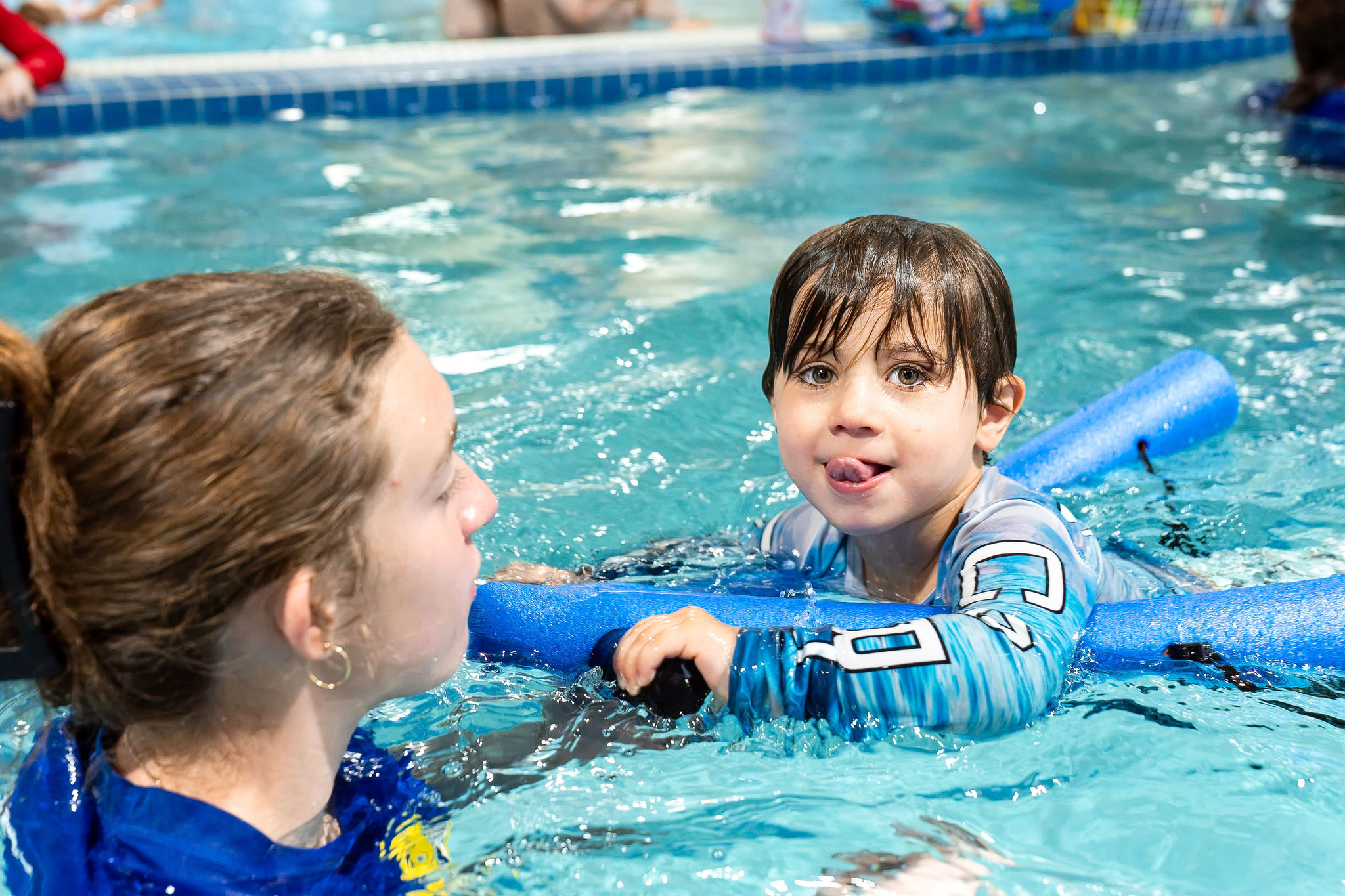
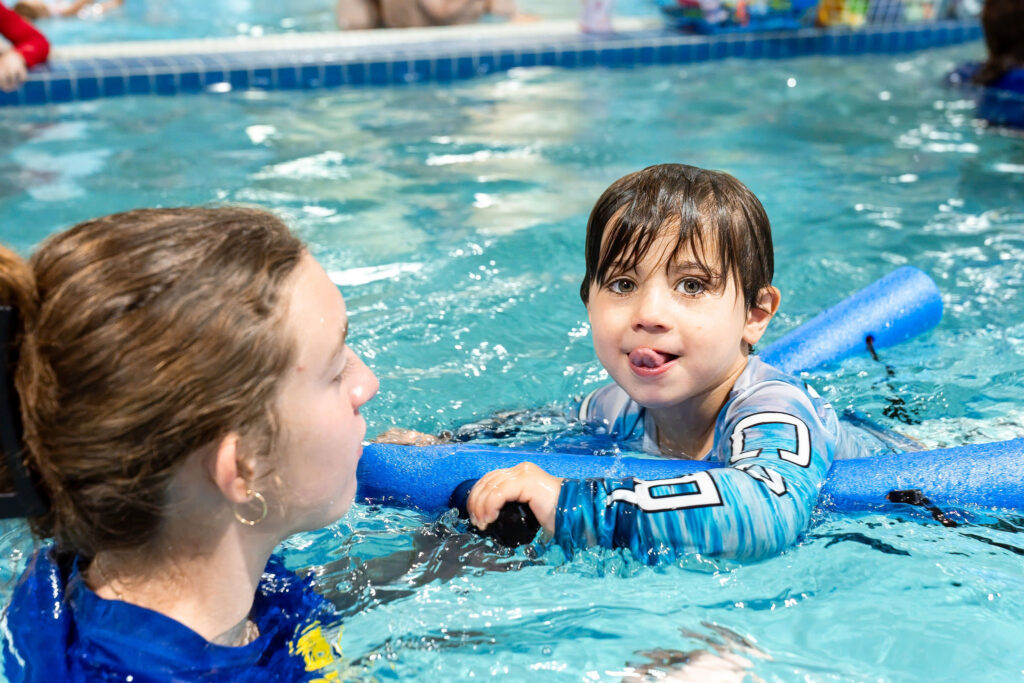
At Little Fins, every lesson is one-on-one already. There’s no group format to adapt around, which means adaptive teaching isn’t a special track. It’s just how we teach when a swimmer needs communication, pacing, or sensory input handled differently than the swimmer before them.
Practically, that means an instructor working with your child can control the things that actually matter: how loud the pool deck is around them, how much visual stimulation is happening nearby, whether instructions come through words, demonstration, or physical guidance, and how much time your child needs between one step and the next. Our lesson pools stay at 94 degrees year-round at both locations, which helps create sensory consistency lesson to lesson, even though every child settles into a new pool environment at their own pace.
None of this requires a special certification badge on our end. It requires an instructor who isn’t managing four other kids at the same time.
What the First Lesson Is Actually For
We ask every family to start with a trial assessment lesson. It’s a short, low-pressure session, not an audition. The instructor spends it watching how your child responds to the water and starting to understand their communication style. You spend it telling us what actually works: what causes anxiety, what your child seeks out or avoids sensory-wise, and what’s worked (or hasn’t) somewhere else.
That conversation matters more than anything we could guess on our own. You know your child. We’re just building the lesson plan around what you already know.
From there, progress gets measured by your child, not a calendar. Some swimmers need a dozen lessons to feel steady putting their face in the water. Others move faster than that. We’re not tracking anyone against a level chart with a deadline attached.
A Quick Note on Cost
Adaptive lessons at Little Fins cost the same as our standard one-on-one instruction. We don’t think a child who needs a more specialized approach should also need a bigger budget to get it. Water safety isn’t something we think should come with a premium price tag.
Ready to Talk It Through?
If you’ve been putting off swim lessons because you’re not sure any program will actually work for your child, a trial assessment lesson is a low-stakes way to find out. Call us at (719) 344-5328, or book online, and we’ll talk through your child’s specific needs before you commit to anything.
A Few Questions Parents Ask Us Often
Does my child need a specific diagnosis to start? No. We work with a wide range of needs, including autism spectrum differences, physical mobility challenges, sensory processing differences, coordination difficulties, and developmental delays. If our approach or facilities aren’t the right fit for your swimmer, we’ll tell you plainly rather than start lessons that won’t work.
What if my child doesn’t use verbal communication? We adjust. Visual demonstration, physical modeling, and picture-based supports families bring with them all become part of the lesson when they’re helpful. We’ll talk through what works for your child during the trial assessment so the instructor is ready from lesson one.
Can I stay nearby during lessons? Yes. Most parents watch from the pool deck, and we’re flexible about positioning based on what helps your child feel secure. Some kids do better with a parent in clear sight; others focus better with a little distance. We’ll figure that out together.