I get this question a lot. A parent finds us online, sees that we offer a parent-and-child program, and asks something like: “Is this just for fun, or is it actually doing something?”
It’s a fair question. And the answer is both. But the doing something part is what I really want to talk about, because that’s where most people are surprised.
Explore Aqua Babies at Little Fins →
What “Mommy and Me” Swim Lessons Actually Are
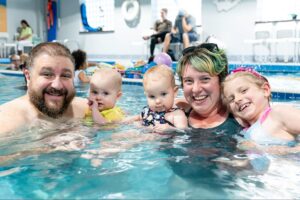
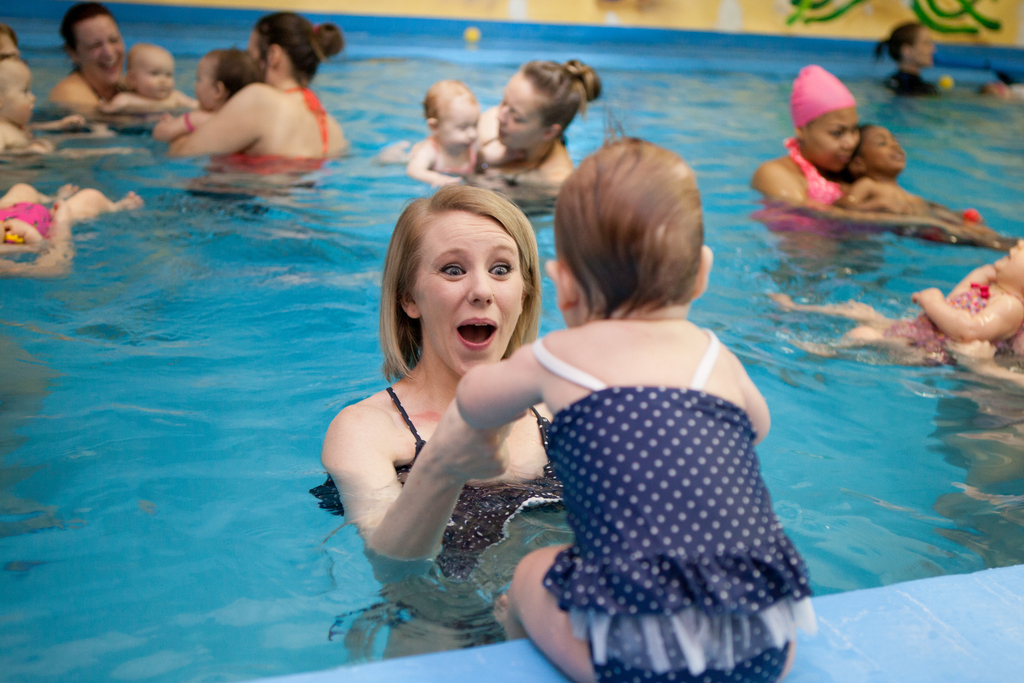
The term covers a lot of ground depending on where you go. At its core, a parent-and-child, or “grown-up-and me” swim lesson is exactly what it sounds like: you get in the water with your baby, and an instructor guides you both through activities designed to build water comfort, basic movement, and early safety awareness.
At Little Fins, we call our parent-participation program Aqua Babies. It’s open to newborns through age five, and it’s built around what actually matters in those early months of water exposure: breath control, body positioning, building trust, and helping you feel confident in the water with your child.
Here’s what I want parents to understand: you are the constant. The instructor teaches you how to hold your baby, how to support them through submersions, how to read when your child is nervous versus when they’re genuinely uncomfortable. That’s information you carry with you every time you’re near a pool, a lake, or even a backyard hose. It doesn’t stay in the pool when you leave.
Each Aqua Babies lesson runs 45 minutes, with 30 minutes of guided instruction followed by 15 minutes of open practice and play. Sessions follow monthly themes that keep things fresh: one month might center on music and movement, another on sensory exploration with bubbles and textures. It feels playful because it is playful. But underneath the fun, your child is developing real water skills.
Why It’s More Than Just Splashing Around
All water time is good water time. I believe that. But structure matters.
A baby who grows up splashing in the bathtub is building familiarity with water, and that’s real. But the skills that keep children safe, learning to hold their breath, understanding that the edge of the pool means safety, beginning to roll onto their back, those are taught. They don’t just happen from proximity.
In Aqua Babies, we start with breath control, because every other water safety skill builds from there. When a child learns early that water entering their mouth is something they can manage, the whole trajectory of how they learn changes. They move from instinctive panic to curiosity. That shift? It changes everything.
We also work on the parent side of things, and I don’t mean that lightly. Nervous parents create nervous swimmers. If you’re tense in the water, your baby feels it. If you flinch every time their face gets wet, they learn that water near the face is something to fear. Part of what Aqua Babies teaches is how to be a calm, steady presence so your child can borrow your confidence while they’re building their own.
Some of the families who enroll in Aqua Babies do it partly for themselves. They want to feel comfortable in the water with their child before ever handing them off for one-on-one instruction. That’s a completely valid reason to be here, and we love it.
Aqua Babies is also one of the first layers of protection in a child’s water safety journey. While no swim lesson can replace active adult supervision, early exposure to water helps children build familiarity and confidence that can support future self-rescue and survival skills.
When Do Mommy and Me Lessons Make Sense?
Sooner than most parents expect. A lot sooner.
We work with families starting at birth. The early months are actually an incredible window. Babies are neurologically receptive in ways they won’t be later, and they haven’t yet developed the water fear that can slow progress significantly when kids start lessons at three or four years old.
A lot of swim programs won’t take children until they’re potty-trained. At Little Fins, we believe that’s a missed window. Some of the most important water safety foundations are built in those earliest months of life. Waiting until a child is older doesn’t make the learning easier; it often makes it harder.
Here in Colorado, we don’t grow up surrounded by water the way families do in coastal or lake-heavy parts of the country. Our kids aren’t spending summers at the beach or jumping in backyard pools year-round. We have to be intentional about giving them early water experiences, because those experiences don’t just happen naturally for us. Aqua Babies is a structured way to do exactly that.
The group setting helps too. Lessons include multiple parent-child pairs, which means babies are watching other children move through the water, and parents are connecting with other families navigating the same stage. There’s something genuinely reassuring about being in a room with other parents working through the same things you are.
For program details and pricing, visit our Infant and Baby Swim Lessons page.
See Aqua Babies availability →
What Comes Next After Parent-Participation Lessons
Think of Aqua Babies as the bridge between your baby’s first bath and their first independent swim lesson. It’s a starting point, not the whole path.
Once children have built water comfort, basic breath awareness, and trust with the pool environment, they’re ready to transition into independent lessons. For most families, that means moving into ISS lessons (Infant Survival Swim), where children begin learning the foundational survival skills: rolling, floating, breath management, and finding a way to safety on their own.
We often tell families that Aqua Babies is where confidence begins and Infant Survival Swim (ISS) is where independence takes shape.
It’s a natural progression, and I love watching families make that transition. Aqua Babies builds the relationship with the water. ISS builds the skills that keep children safe in it. We have 18-month-olds and two-year-olds who come through that path and are swimming the length of the pool because they started with a strong foundation instead of being thrown into stroke development before they were ready.
Some families come to us having done parent-and-child lessons elsewhere and want to continue the journey. Some start with Aqua Babies here and move directly into ISS when their child is ready. Either way, we meet kids where they are and build from there.
What to Look for in a Parent-and-Child Swim Program
Not all programs are built the same. A few things worth asking before you enroll:
Does the instructor guide you, or just supervise? The best parent-and-child programs teach you specific skills: how to hold your baby for submersion, how to respond to coughing or distress, how to build in rest. If the instructor is mostly watching from the side, you’re not getting the full benefit.
Is the focus on water safety, or just water comfort? Comfort is a great starting point. But a program that stops there is leaving the most important work undone. Look for language about breath control, survival sequencing, and water safety, not just songs and splashing.
Are the pools warm enough for young babies? This matters more than most people realize. Our pools at both Little Fins locations are heated to 94°F year-round. Cold water creates tension, and tension works against everything you’re trying to build with a baby in the water.
Is this year-round? Drowning doesn’t take a winter break. And learning to swim, really learning it, takes consistent practice over time. We offer lessons year-round at both our Garden of the Gods location and our Union Boulevard location, so families don’t lose momentum between seasons.
Water safety starts earlier than most people think. And it starts with exactly this: getting in the pool together, building trust, and laying the foundation for everything that comes next.
If you’re ready to get started, explore Aqua Babies or give us a call at (719) 344-5328. We’d love to welcome your family to Little Fins.
Frequently Asked Questions
What age can my baby start mommy and me swim lessons?
Aqua Babies is open to newborns through age five. Reach out to our team and we’ll help you find the right starting point for your child’s age and readiness.
Do I need any swimming experience to participate in Aqua Babies?
You don’t need to be a strong swimmer. You need to be comfortable being in the water with your child. Our instructors guide you through everything, and we’ll help you build your confidence right alongside your baby’s.
When should my child transition out of parent-and-child lessons into independent instruction?
It varies by child, and that’s okay. Some make the transition around 12 to 18 months; others stay in parent-participation lessons a bit longer. We help families navigate that transition based on where their child actually is, not a one-size-fits-all timeline.
Are Mommy and Me Swim Lessons Worth It?
Absolutely.
Parent-participation lessons help children develop comfort and familiarity in the water while teaching parents how to safely support their child’s aquatic development. The skills learned in Aqua Babies create a strong foundation for future swim lessons and can help build confidence for both parent and child.
What are mommy and me swim lessons?
Mommy and me swim lessons are parent or grown-up and me-participation swim classes where a parent or trusted adult enters the water with their child to learn foundational water safety, breath control, and water confidence skills together.
About the Author
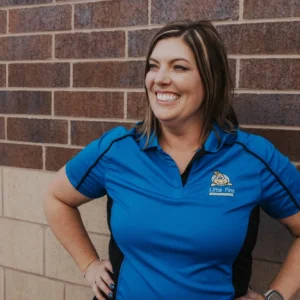 Lauri (Thomas) Armstrong is the founder and owner of Little Fins Swim School in Colorado Springs, Colorado. As a leader in Infant Survival Swim (ISS) education and drowning prevention advocacy, Lauri has helped thousands of families build life-saving water skills through early, research-informed instruction.
Under her leadership, Little Fins has become one of Colorado Springs’ premier destinations for one-on-one swim lessons, offering parent-and-me water introduction beginning at 2 months and structured safety and survival training starting at 6 months.
Lauri is passionate about replacing fear with confidence and believes water safety should begin before a child can walk — not after a close call. Her mission is simple: equip children with skills that could one day save their life.
Safety first. Skills for life. Awareness for the world.
➡️ Read more about Infant Survival Swim
➡️ Learn about our Colorado Springs swim lessons
➡️ Schedule a trial lesson